The problem isn't the stove
Most families given a clean cookstove keep lighting the old open fire too. Researchers call it stove stacking. Grants arrive, hardware is distributed, and the smoke keeps rising.
The shortfall is behavioural, not technological. Which means it can be redesigned.
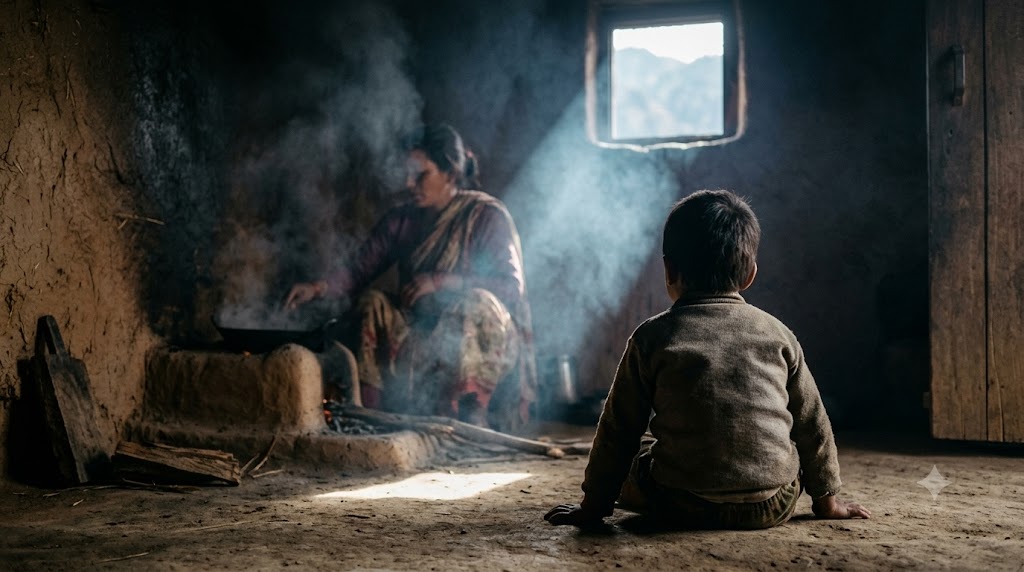
In most of these homes, cooking happens over an open biomass fire, wood and agricultural residue burned indoors, inside a small kitchen with little airflow and often no chimney or flue to carry smoke outside. This isn't for lack of an obvious answer, a flue, a better stove, it's that adopting one is harder than it looks: fuel is free, a fix costs money upfront, and the smoke, while dangerous, is familiar.
In many of these communities, grid electricity has already arrived, used for lighting and charging phones, rarely for cooking. Induction or electric plates exist, but need a stable, higher-power supply that many rural connections can't yet guarantee, plus an upfront cost few households can absorb. The barrier isn't that nothing has arrived. It's that switching, even where it's technically possible, doesn't happen on its own, which is exactly why a behavioural nudge, not just infrastructure, is part of the answer.
of households stop using the improved cookstove entirely.
Lohani et al., 2025
of households still rely on traditional open-fire cooking indoors.
Clean Cooking Alliance
premature deaths a year in Nepal from indoor air pollution.
Giri et al., 2025